


From Agro-Waste to Green Skills: Rethinking Climate Resilience
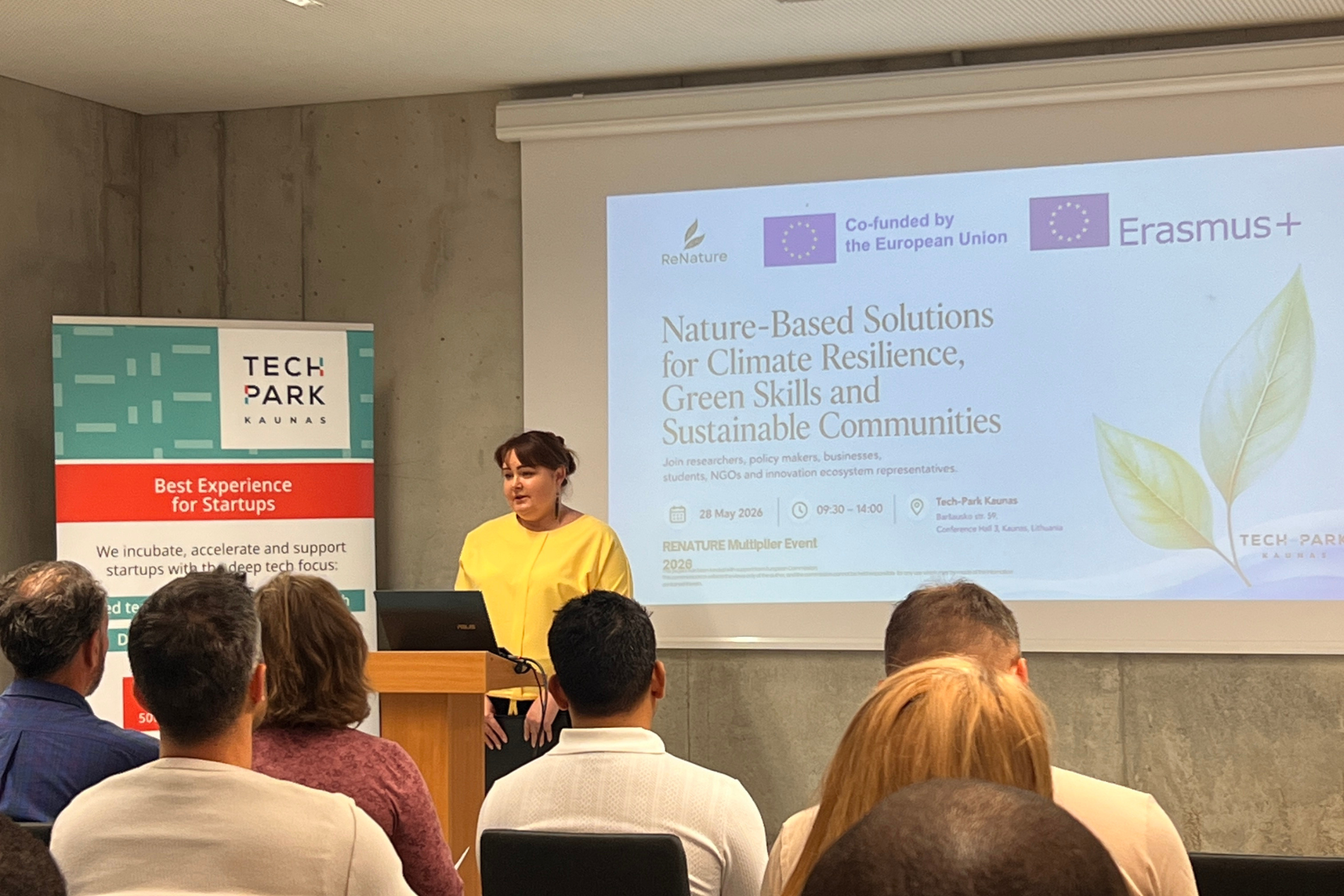
In the search for climate resilience, some of the most promising answers may already exist in nature. This idea shaped the RENATURE Multiplier Event 2026, where representatives from research, education, business, policy and civil society gathered to discuss nature-based solutions, green skills and sustainable communities.
The event invited participants to look at nature not only as something to be protected, but also as a living model for innovation – one that can inspire how cities adapt, how materials are designed, how people learn and how communities prepare for climate challenges.
Opening the event, Paulius Nezabitauskas, Director of Tech-Park Kaunas, welcomed participants and underlined the importance of reconnecting with nature as a source of knowledge and resilience.
“Nature is not only something we must protect – it is also one of our greatest teachers. By learning from natural systems and contributing to their preservation, we can build more resilient communities and more responsible innovation ecosystems,” said P. Nezabitauskas.
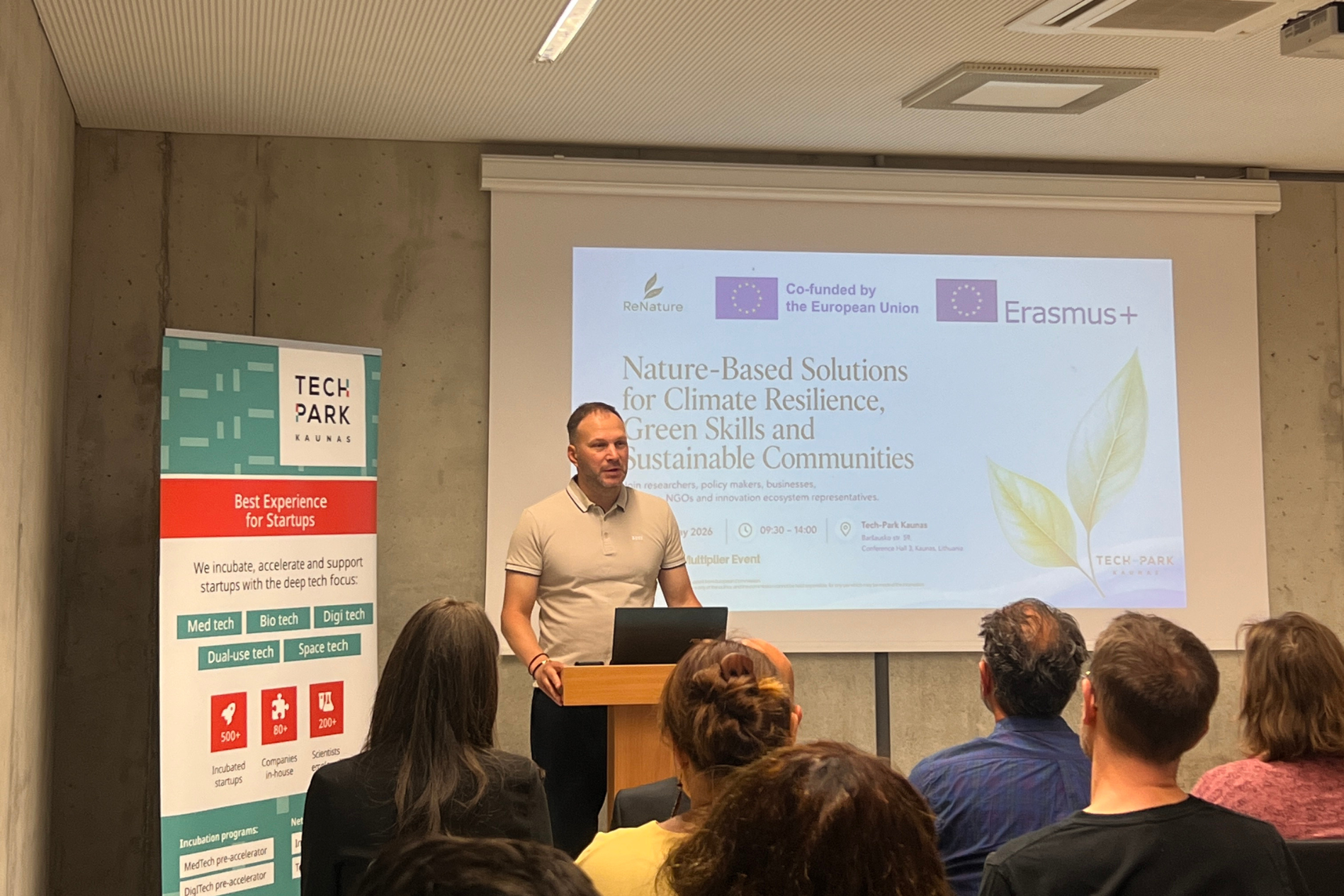
Paulius Nezabitauskas, Director of Tech-Park Kaunas
Climate Resilience Through Nature-based Solutions
The event opened with a presentation by Dr. Pierro Ciccioli from the National Research Council of Italy, who introduced the RENATURE project and its role in building climate resilience through nature-based solutions. The presentation highlighted that green spaces, biodiversity, natural habitats and semi-natural environments can become part of the ecological and social infrastructure that helps communities respond to heat, flooding, soil degradation, biodiversity loss and other climate-related risks.
The presentation also stressed that nature-based solutions are not limited to urban greening. They can be applied across urban, natural and semi-natural systems, especially when combined with participatory approaches such as community-driven development, community-based natural resource management and integrated conservation and development practices.
“Climate resilience begins with understanding that cities, natural habitats, semi-natural environments and communities are part of living ecosystems. Nature-based solutions help us design responses that are both scientifically grounded and socially meaningful,” noted Dr. P. Ciccioli.

Dr. Pierro Ciccioli from the National Research Council of Italy
European Practices and Sustainable Technologies
M. Luzetti from the University for Foreigners of Perugia presented a comparative overview of nature-based solutions in Europe, focusing on key findings, challenges and best practices. The presentation showed that successful green transition depends not only on innovative ideas, but also on local engagement, policy support and the ability to adapt good practices to real community needs.
A presentation by Prof. Dr. Visvaldas Varžinskas, Head of the Research Center for Advanced Packaging Materials and Technologies at Kaunas University of Technology (KTU), focused on bio-based and biodegradable polymer composites made from locally sourced agro-waste. His presentation connected climate resilience with everyday products, showing how circular economy principles can help reduce dependence on fossil-based materials and give new value to resources that would otherwise be discarded.
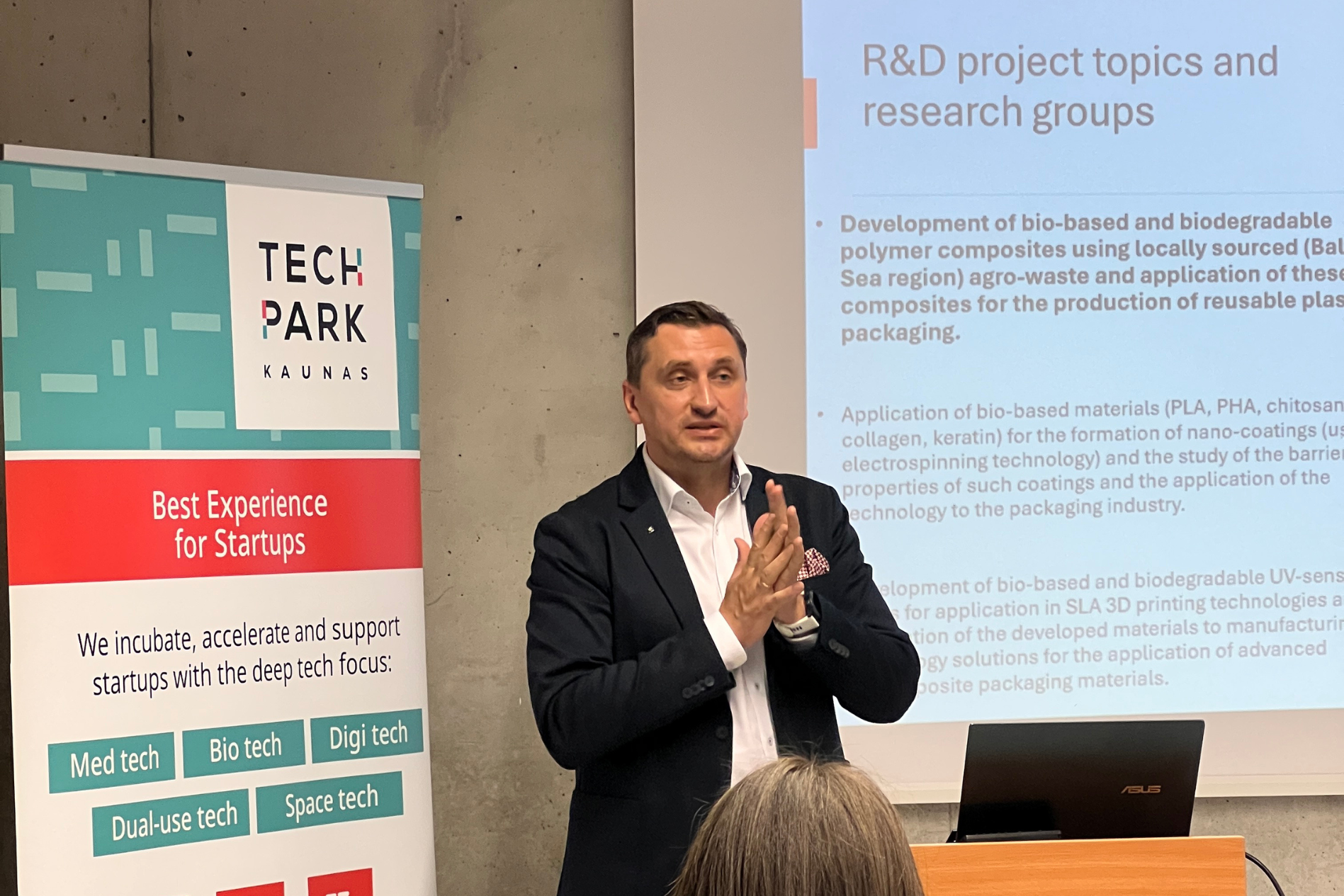
Prof. Dr. Visvaldas Varžinskas, Head of the Research Center for Advanced Packaging Materials and Technologies at Kaunas University of Technology (KTU)
“Agro-waste can become a valuable resource when science, design and industry work together. Bio-based packaging materials show how circular thinking can reduce environmental impact while creating practical solutions for business,” explained Prof. Dr. V. Varžinskas.
Prof. Dr. Erika Adomavičiūtė from KTU discussed advanced electrospun materials and the role of nanotechnology in sustainability. Her presentation explored how high-tech materials can contribute to greener solutions by enabling more efficient, lighter and more functional products, while also raising the question of how advanced technologies can be designed and applied responsibly.
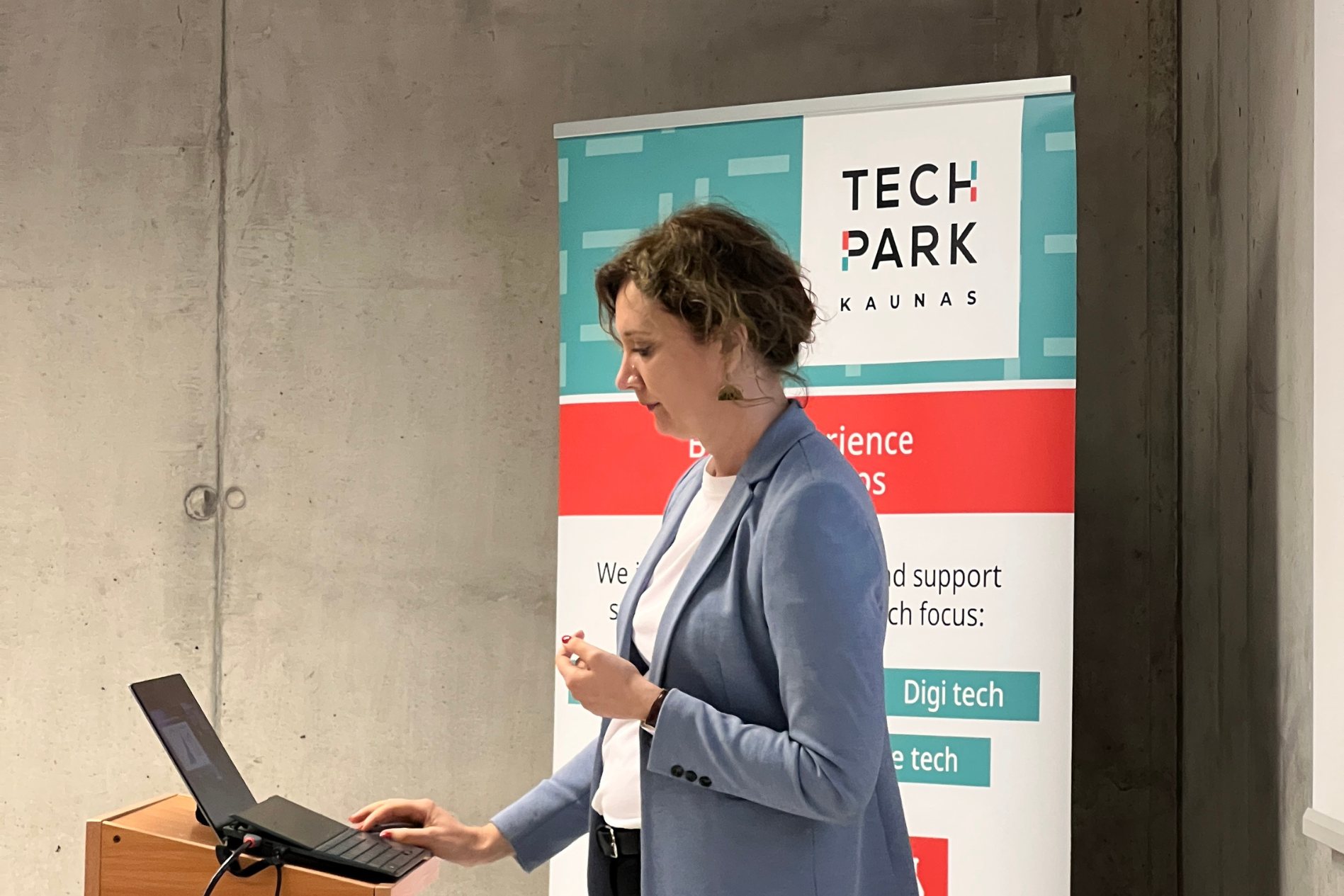
Prof. Dr. Erika Adomavičiūtė
Outdoor Learning and Green Skills
presented enabling outdoor work and study ecosystems for sustainable personal, professional and planetary Assoc. Prof. Dr. Inga Gurauskienė from KTU wellbeing. Her presentation added a human dimension to the event, emphasizing that people’s connection to nature shapes not only how they learn and work, but also how they understand environmental responsibility.
“Spending more time in nature does not have to be complicated - it can start with studying, working or holding a meeting outside. These everyday practices can improve wellbeing, support creativity and help people build a closer connection with the environment,” noted Assoc. Prof. Dr. I. Gurauskienė.
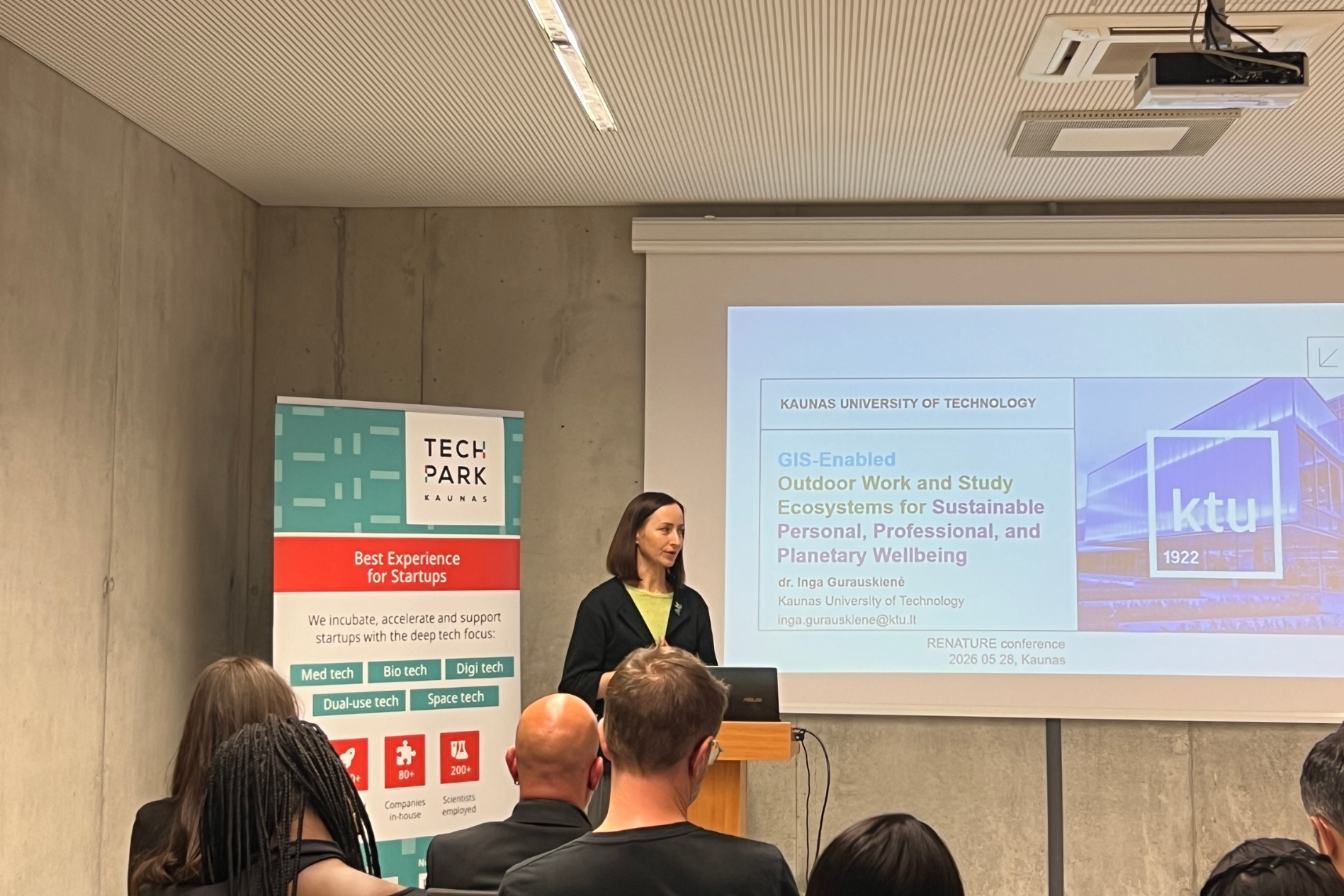
Prof. Dr. Inga Gurauskienė
The event concluded with an open discussion and networking lunch, encouraging participants to explore practical ways to apply nature-based solutions in education, research, business and community development. The shared message of the day was clear: building climate resilience requires both technological progress and a renewed ability to learn from nature.
The event was organised as part of the RENATURE project, co-funded by the European Union’s Erasmus+ KA2 Strategic Partnership for VET. The project aims to strengthen the education sector’s capacity to apply nature-based solutions in climate change mitigation and adaptation through innovative learning programmes, open digital resources and practical tools for educators, students and institutions across Europe.
The event programme and related materials can be accessed on this page.